
Your feet are covered most of the day. If you're diabetic, periodic screening is important for good health. Numbness is often a sign of diabetic foot and can mask a sore or wound.
Your feet are covered most of the day. If you're diabetic, periodic screening is important for good health. Numbness is often a sign of diabetic foot and can mask a sore or wound.

Rheumatoid arthritis, or RA, is an autoimmune condition that can cause ongoing inflammation in the joints. When RA affects the feet, it may make walking and daily activities uncomfortable. Symptoms can include swelling, warmth, and pain. Morning stiffness may last for an hour or longer. The feet can also develop changes in joint shape over time. These changes may affect balance and footwear comfort.
The metatarsophalangeal, or MTP joints, connect the toes to the long bones of the foot. RA can cause swelling and tenderness in these joints, making it painful to push off while walking. The proximal interphalangeal, or PIP joints, are located in the middle sections of the toes. Inflammation here may cause stiffness or changes in toe position. The distal interphalangeal, or DIP joints, are closest to the toenails. Although RA more commonly affects larger foot joints, these smaller joints can also become painful and inflamed.
Risk factors include family history, smoking, and being female. RA can occur at any age, although it often begins during adulthood. The exact cause is not fully understood. The immune system mistakenly attacks healthy joint tissue, which leads to inflammation. Persistent inflammation may damage cartilage and bone. It can also contribute to deformities that change how pressure is distributed across the foot.
A podiatrist can evaluate your feet, review symptoms, and recommend imaging or other testing when appropriate. Treatment may include wearing supportive footwear, custom orthotics, and medication management coordinated with your medical team. A podiatrist may also recommend padding to protect painful pressure areas and reduce irritation. Regular follow-up can help monitor joint changes and protect foot function. If you have symptoms of RA in the feet, it is suggested that you consult a podiatrist for effective relief and management solutions.
Because RA affects more than just your joints, including the joints in your feet and ankles, it is important to seek early diagnosis from your podiatrist if you feel like the pain in your feet might be caused by RA. For more information, contact one of our podiatrists of Podiatry Associates of Texas. Our doctors will assist you with all of your podiatric concerns.
What Is Rheumatoid Arthritis?
Rheumatoid Arthritis (RA) is an autoimmune disorder in which the body’s own immune system attacks the membranes surrounding the joints. Inflammation of the lining and eventually the destruction of the joint’s cartilage and bone occur, causing severe pain and immobility.
Rheumatoid Arthritis of the Feet
Although RA usually attacks multiple bones and joints throughout the entire body, almost 90 percent of cases result in pain in the foot or ankle area.
Symptoms
Diagnosis
Quick diagnosis of RA in the feet is important so that the podiatrist can treat the area effectively. Your doctor will ask you about your medical history, occupation, and lifestyle to determine the origin of the condition. Rheumatoid Factor tests help to determine if someone is affected by the disease.
If you have any questions, please feel free to contact our offices located in Arlington Weatherford, Mineral Wells, and Farmers Branch, TX . We offer the newest diagnostic and treatment technologies for all your foot care needs.

Foot stretches can help runners prepare their feet and ankles for activity. They may improve flexibility, mobility, and awareness when performed regularly. Options include toe stretches, ankle mobility exercises, and toe scrunches. These movements can be useful before or after running, depending on comfort and training needs. They may help reduce stiffness and support efficient movement, but they cannot prevent every running injury.
A toe stretch gently lengthens the tissues around the toes. Sit and use your hand to move the toes backward until you feel a mild stretch. Hold briefly without forcing the movement. This exercise may improve toe flexibility and help runners maintain comfortable foot motion. An ankle mobility exercise can involve slowly moving the ankle through controlled circles. Move in both directions with careful control while keeping the lower leg relaxed. This can support ankle mobility and reduce stiffness.
Toe scrunches strengthen the small muscles that help support the foot. Sit with your foot flat and use your toes to gently gather a towel toward you. Relax and repeat several times. This exercise may improve foot strength and control, which can help runners manage impact. Risk factors for running injuries include sudden mileage increases, and training on challenging surfaces. Poor flexibility or limited ankle mobility may also affect movement.
A podiatrist can evaluate your feet and ankles when pain, swelling, or injuries develop. The examination may include checking strength, flexibility, and tender areas. Imaging tests may be recommended when a stress fracture or other injury is suspected. Treatment also can include activity changes, wearing supportive footwear, or custom orthotics. Stretching should never cause sharp pain. If you have developed foot and ankle injuries from running, it is suggested that you consult a podiatrist for effective relief and treatment solutions, which may include additional foot and ankle stretches.
Exercising your feet regularly with the proper foot wear is a great way to prevent injuries. If you have any concerns about your feet, contact one of our podiatrists of Podiatry Associates of Texas. Our doctors will treat your foot and ankle needs.
How to Prevent Running Injuries
Many common running injuries are caused by overuse and overtraining. When the back of the kneecap starts wearing out and starts causing pain in your knee, this is commonly referred to as runner’s knee. Runner’s knee is a decrease in strength in your quadriceps and can occur if you’re not wearing properly fitted or supporting shoes. To prevent runner’s knee, focusing on hip strengthening is a good idea, as well as strengthening your quads to keep the kneecaps aligned.
What Are Some Causes of Running Injuries?
- One cause of a common running injury is called iliotibial band syndrome.
- Plantar fasciitis is also another common injury.
- Stress fractures can occur from overtraining, lack of calcium, or even your running style.
Best Ways to Prevent Running Injuries
- Wear footwear that fits properly and suits your running needs.
- Running shoes are the only protective gear that runners have to safeguard them from injury.
- Make a training schedule. Adding strengthening exercises as well as regular stretching can help keep you strong and limber and can lessen the possibility of injuries.
- Stretching keeps muscles limber; this will help you gain better flexibility.
If you have any questions, please feel free to contact our offices located in Arlington Weatherford, Mineral Wells, and Farmers Branch, TX . We offer the newest diagnostic and treatment technologies for all your foot care needs.
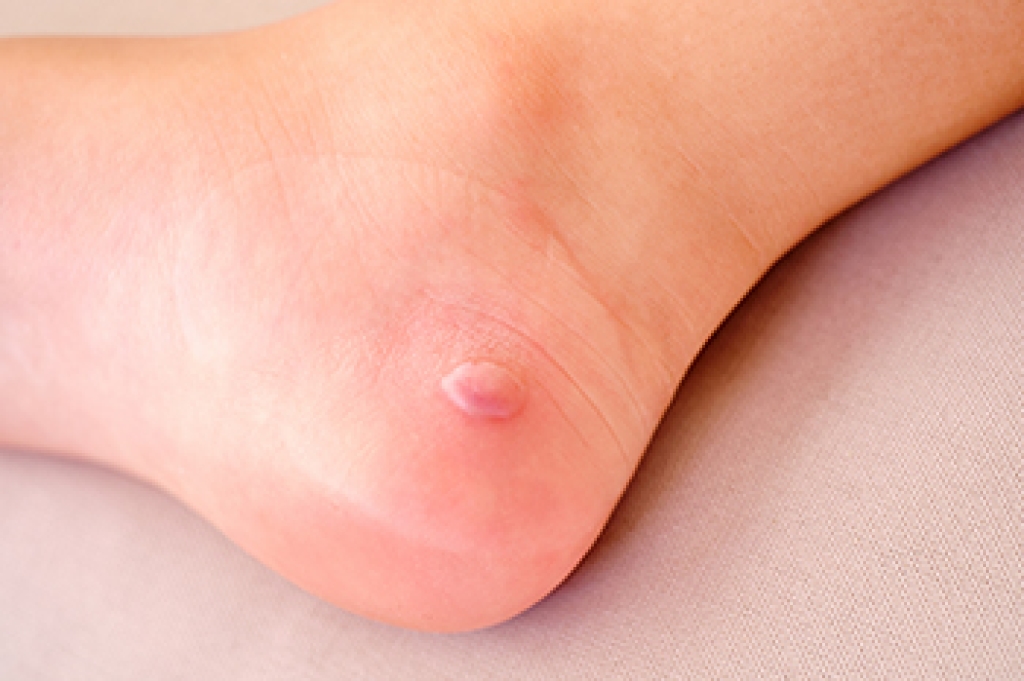
Blisters are small pockets of fluid that form beneath the outer layer of skin. On the feet, they frequently develop when repeated friction damages the skin. Shoes that rub against the heel or toes can create enough friction to cause a blister. Heat, burns, or certain skin reactions can also lead to blister formation. Most blisters contain clear fluid, although some contain blood after a stronger injury. A blister can feel tender or painful, especially when pressure from a shoe repeatedly irritates the affected area.
Foot blisters can vary in size and appearance. The skin around a blister can become red and sore. A blister can break open, leaving the sensitive skin underneath exposed. This can increase the risk of infection. Signs of infection include increasing pain, redness, or swelling. Pus can also develop in an infected blister. People with diabetes need to pay particular attention to blisters on their feet because reduced sensation can make them harder to notice. Problems with blood flow can also interfere with healing. Repeated blisters can indicate that pressure or friction is affecting the same area of the foot.
A podiatrist can examine a painful blister and determine whether infection or another foot problem is present. The evaluation can also identify pressure points and areas where shoes are repeatedly rubbing against the skin. A podiatrist can recommend ways to reduce pressure and protect the affected area while it heals. Care can also address foot structure or movement patterns that contribute to repeated friction. Blisters that are very painful, keep returning, or show signs of infection deserve prompt evaluation. Patients with diabetes should be especially careful about changes in the skin of their feet. If you have developed foot blisters, it is suggested that you schedule an appointment with a podiatrist effective relief and prevention tips.
Blisters are prone to making everyday activities extremely uncomfortable. If your feet are hurting, contact one of our podiatrists of Podiatry Associates of Texas. Our doctors can provide the care you need to keep you pain-free and on your feet.
Foot Blisters
Foot blisters develop as a result of constantly wearing tight or ill-fitting footwear. This happens due to the constant rubbing from the shoe, which can often lead to pain.
What Are Foot Blisters?
A foot blister is a small fluid-filled pocket that forms on the upper-most layer of the skin. Blisters are filled with clear fluid and can lead to blood drainage or pus if the area becomes infected.
How Do Blisters Form?
Blisters on the feet are often the result of constant friction of skin and material, usually by shoe rubbing. Walking in sandals, boots, or shoes that don’t fit properly for long periods of time can result in a blister. Having consistent foot moisture and humidity can easily lead to blister formation.
Prevention & Treatment
It is important to properly care for the affected area in order to prevent infection and ease the pain. Do not lance the blister and use a Band-Aid to provide pain relief. Also, be sure to keep your feet dry and wear proper fitting shoes. If you see blood or pus in a blister, seek assistance from a podiatrist.
If you have any questions, please feel free to contact our offices located in Arlington Weatherford, Mineral Wells, and Farmers Branch, TX . We offer the newest diagnostic and treatment technologies for all your foot care needs.

Gout is a form of inflammatory arthritis that develops when uric acid builds up in the body. Excess uric acid can form sharp crystals inside a joint, causing sudden inflammation. Symptoms often include severe joint pain, swelling, and tenderness. The big toe is a common location, although gout can affect other joints. Attacks may begin suddenly and become intense within hours.
Several factors can increase the likelihood of developing gout. Risk is higher for people with elevated uric acid levels, kidney disease, or a family history of gout. Obesity can also contribute to increased risk. Diets high in certain purine-rich foods may raise uric acid. Alcohol consumption and some medications can also affect uric acid levels. Gout becomes more common with age, particularly among adults with other health concerns.
Testing for gout starts with a podiatrist reviewing your symptoms and examining the affected joint. A blood test can measure uric acid levels, but a normal result does not always rule out gout during an active attack. Joint fluid analysis provides stronger confirmation by checking fluid for uric acid crystals. During this test, fluid is carefully removed from the joint and examined. X-rays may help rule out other causes. Ultrasound imaging can detect crystal deposits around the joint.
Once gout is identified, a podiatrist can recommend treatment based on your symptoms and medical history. Treatment may include medication to reduce inflammation during an attack. Long-term management may involve medications that lower uric acid, when medically appropriate. Rest, wearing comfortable footwear, and reducing pressure on the painful joint can also improve comfort. Early evaluation can help prevent repeated attacks and joint damage. If you have symptoms of gout, it is suggested that you are under the care of a podiatrist who can help you to manage this potentially painful condition.
Gout is a foot condition that requires certain treatment and care. If you are seeking treatment, contact one of our podiatrists from Podiatry Associates of Texas. Our doctors will treat your foot and ankle needs.
What Is Gout?
Gout is a type of arthritis caused by a buildup of uric acid in the bloodstream. It often develops in the foot, especially the big toe area, although it can manifest in other parts of the body as well. Gout can make walking and standing very painful and is especially common in diabetics and the obese.
People typically get gout because of a poor diet. Genetic predisposition is also a factor. The children of parents who have had gout frequently have a chance of developing it themselves.
Gout can easily be identified by redness and inflammation of the big toe and the surrounding areas of the foot. Other symptoms include extreme fatigue, joint pain, and running high fevers. Sometimes corticosteroid drugs can be prescribed to treat gout, but the best way to combat this disease is to get more exercise and eat a better diet.
If you have any questions, please feel free to contact our offices located in Arlington Weatherford, Mineral Wells, and Farmers Branch, TX . We offer the newest diagnostic and treatment technologies for all your foot care needs.
Connect With Us
